Interior Design Is No Longer a Finish‑Line Decision—It’s a Financial Strategy
The development landscape has shifted: rent growth has slowed, lending is tighter, and supply is increasing. In this environment, location and scale alone no longer guarantee performance. Every dollar in a project must earn its keep. Interior design—traditionally treated as a cosmetic, back‑end task—now directly influences lease‑up velocity, operating metrics, and long‑term asset valuation. To drive measurable returns, interior design must be treated as a strategic, accountable discipline that influences revenue, contains expense, and instills investor confidence through disciplined process, priority setting, and clear communication.
Design must justify its budget, and the process matters
High‑performing interiors are more than attractive finishes. When design is embedded from schematic phase through closeout, it becomes a lever for measurable financial outcomes. That requires compressed timelines, ongoing budget conversations, and intentional, tiered options that balance design intent with cost realities. Performance‑minded design decisions—around leasing centers, model units, resilient finishes, and amenity programming—accelerate leasing, reduce turnover and maintenance, and create NOI upside. But these outcomes only materialize when interior teams are proactive, pragmatic, and integrated into underwriting and construction workflows.
Process, communication, and options are not nice‑to‑haves—they are differentiators
- Early engagement: In schematic design, interiors influence unit planning, amenity adjacencies, and MEP load decisions. Early alignment between architecture, asset management, and interiors prevents costly late changes and unlocks greater ROI on amenity and unit layouts.
- Tight timelines and continual dialogue: Regular budget reviews with owners, the GC, and trade partners keep specifications viable. Clear, documented approvals and contingency allowances reduce surprises during pricing and construction.
- Intentional, layered solutions: Provide multiple spec tiers and alternate assemblies up front. This preserves aesthetic intent while offering budgeted choices that can be selected according to pro forma constraints or value‑engineering outcomes.
- Interior‑led value engineering (VE): When cost reductions are necessary, designers must lead. Designers translate reductions into acceptable material substitutions, phasing strategies, or reprioritization of impact areas so savings do not undermine leasing or long‑term operations.
The next competitive advantage
Communities that outperform won’t necessarily have the biggest budgets; they’ll have intentional design strategies aligned with operating goals and resident expectations. Treating interior design as a financial strategy—one that shortens lease‑up, increases retention, reduces O&M, and supports stronger valuations—turns design teams into strategic partners for developers and investors. Studio 10 approaches each project with measurable objectives, regional expertise, and design choices informed by lifecycle cost and operational impact, not just aesthetics.
Three design priorities that materially affect financial performance
1) Early interior design engagement and front‑loaded, high‑impact decisions
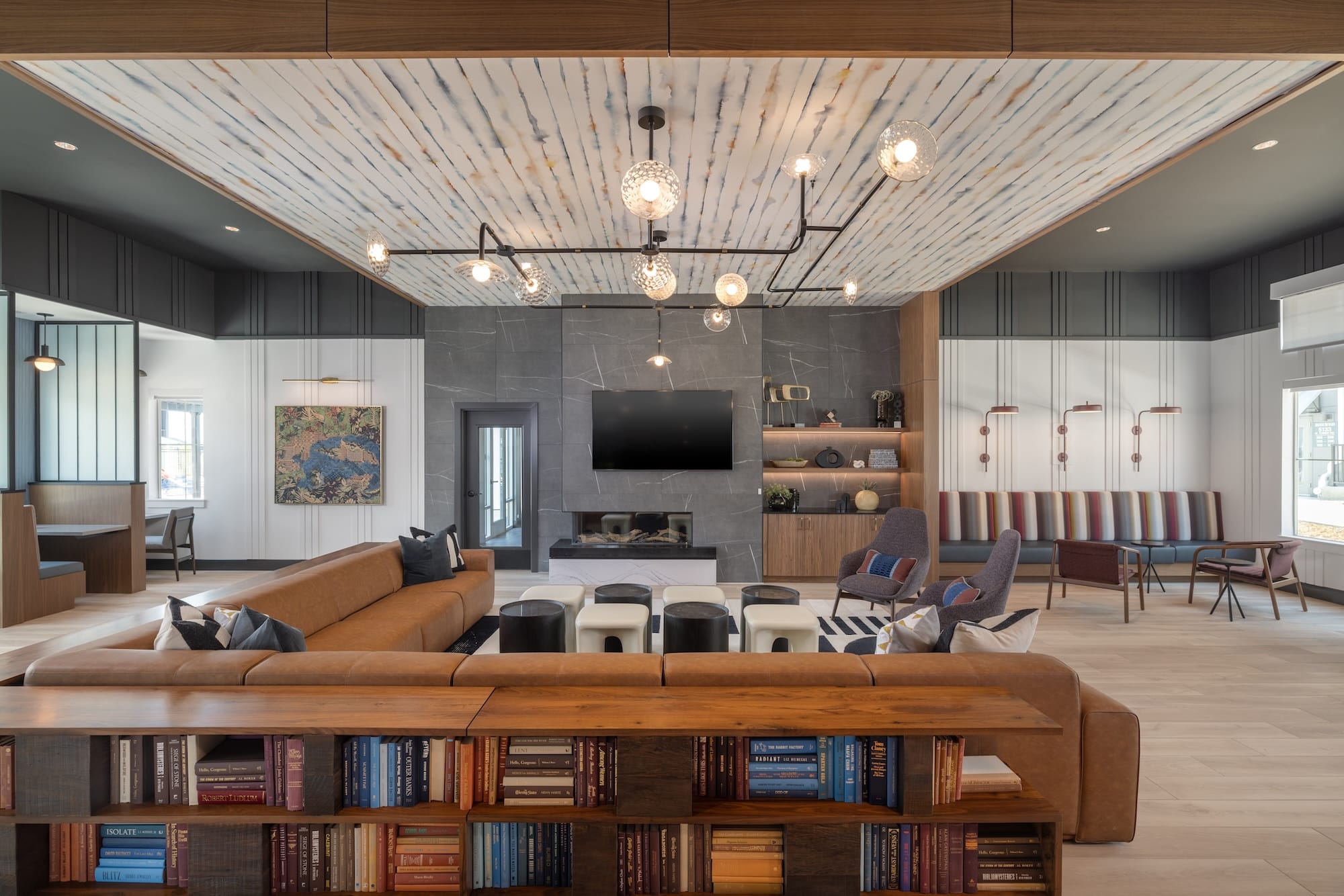
Early interior design involvement is paramount. Aligning interiors with the initial concept, target demographic, branding, and architecture from the outset enables cohesive programming and prioritizes the tour path. Strategic lighting, clear sight lines, and furniture plans that showcase practical storage and functional layouts convert tours into leases; making these pivotal decisions up front keeps the overall project team proactive instead of reactive, avoids costly late changes, and preserves budget and schedule.
2) Flexible, programmable amenity design
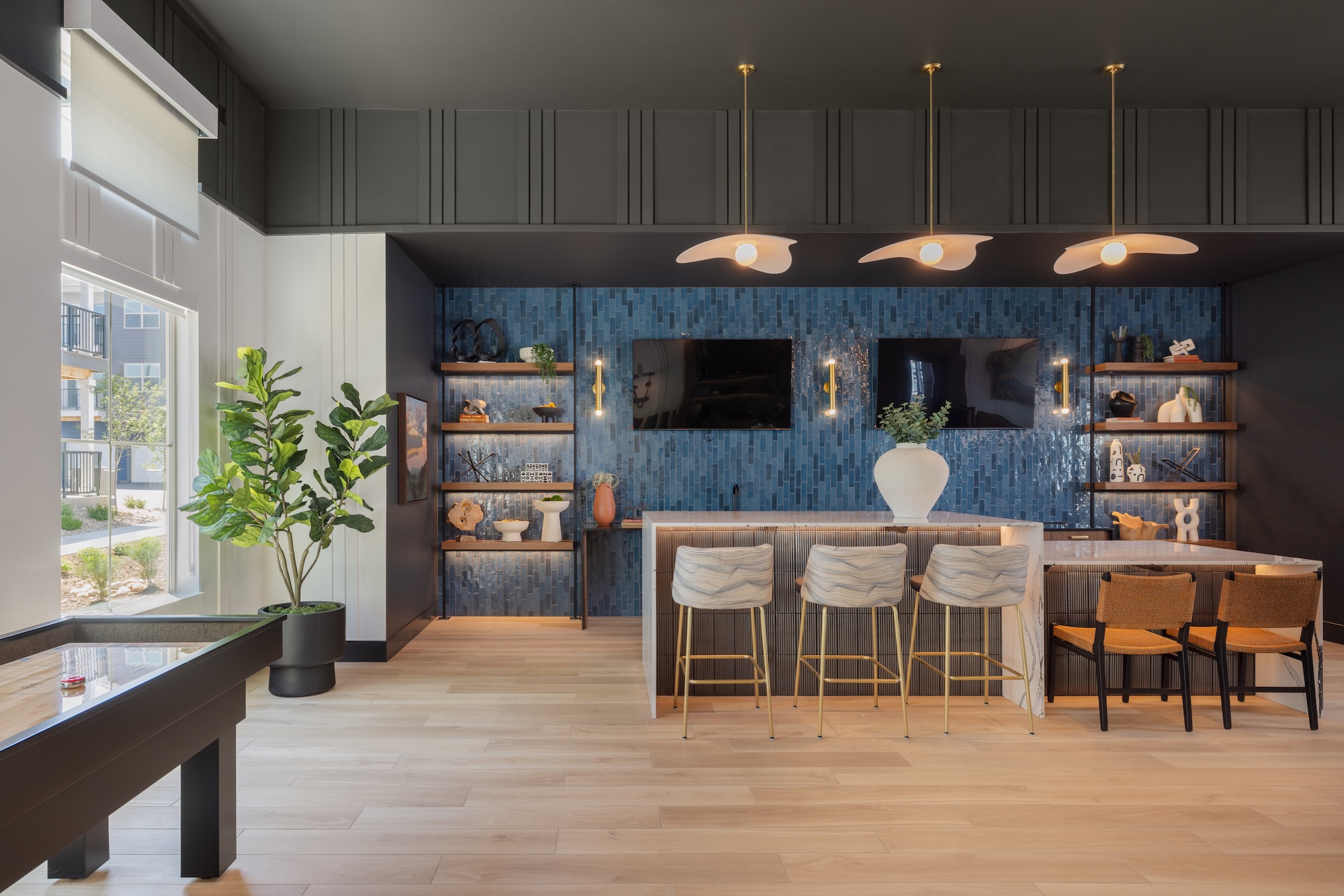
Design amenity footprints for adaptability: modular furniture, concealed storage, and integrated power/data enable quick reconfiguration for co‑working, events, wellness, or dining. Specify durable, maintainable systems and propose phased activation—deliver a core fit‑out first and revenue‑generating add‑ons later—to protect cash flow while preserving long‑term design goals.
3) Durable finishes and maintainable systems
Select materials with lifecycle and serviceability in mind. Include vendors’ O&M profiles and replacement cost ranges in the spec package. Offer alternate finish palettes that preserve top‑tier aesthetics through focal elements or surface treatments while economizing on high‑wear base materials.
Operationalizing intentional, accountable interiors
Set measurable, design‑linked objectives
-
- Define design KPIs tied to financial outcomes: lease‑up timeline, effective rent uplift, renewal rate, turnover costs, amenity utilization, and ancillary revenue.
- Map each finish and amenity decision to these KPIs in the budget and pro forma so trade‑offs are explicit and defensible.
- Deliver layered solutions and decision checkpoints
- Produce specification bundles (A/B/C) and system‑level alternates during design development, each accompanied by cost, lifecycle, and visual impact summaries.
- Establish formal decision checkpoints tied to procurement windows, so budget choices are locked before pricing and permit milestones.
- Embed interiors in cross‑functional teams
- Include property management, leasing, maintenance, asset managers, and contractors early. Their operational insight exposes hidden cost drivers, repair cadences, and resident priorities that should shape interior specifications.
- Require O&M impact summaries from manufacturers: expected repair cadence, replacement cost, warranty terms, and lead times.
- Lead VE with KPIs and options
- Run VE workshops prioritized by measurable outcomes. When changes are required, offer solutions that preserve perceived value—scaled‑back feature elements, strategic focal upgrades, or phased amenity rollouts that defer non‑critical spend while sustaining core design intent.
- Quantify VE outcomes in dollars and KPI impacts so stakeholders can choose the right compromise.
- Pilot, measure, and iterate
- Run A/B pilots for unit types and amenity layouts to validate assumptions about rent premiums, lease velocity, and maintenance calls.
- Track results monthly for 12–18 months post‑stabilization and feed findings into future phases and spec libraries to reduce risk and refine standards.
- Communicate impact clearly
- Build investor‑ready dashboards showing conversion rates, time‑to‑lease, renewal tenure, turnover cost savings, and NOI uplift tied to interior decisions. Quantified outcomes build lender and investor confidence and justify design investments.
Regional context matters—local expertise drives resilience
Climate and regional renter expectations determine which interior strategies deliver the best returns. Cold‑climate priorities (insulation, gear storage, durable entry finishes) differ from coastal needs (corrosion‑resistant hardware, moisture‑managed millwork, shaded outdoor transitions). Embedding regional expertise into the design process ensures specifications are resilient, code‑appropriate, and cost‑effective in practice.
Studio 10’s New Sarasota office—strategic local presence
These regional differences underscore a broader point: design strategy benefits from deep, integrated local knowledge. While Studio 10 has delivered nationally for 18 years, opening a Sarasota office lets us embed Southeast climate and market insight into an established, strategic design process. A local presence enables faster iteration with owners and operators, closer coordination with contractors and suppliers, and climate‑appropriate solutions tailored to seasonal demand and Florida’s regulatory realities. Maintaining our Denver office preserves national connectivity and institutional knowledge while allowing each studio to respond nimbly to regional priorities.
Final thought
Proactive, process‑driven, financially literate interior design is a strategic advantage. By leading with design intent, offering layered options, maintaining continuous budget dialogue, and owning VE outcomes, interior teams protect aesthetic goals while improving financial performance. Positioned as accountable partners—early and often—with reliable, regionally specific processes, interiors turn finish‑line details into sustainable, long‑term value.
Table Of Content